Sunday, 29 September 2019

FREEDOM EXPRESSION HAS DIFFERENT MEANINGS FOR DIFFERENT PEOPLE.

Freedom of expression is defined as the right to express one's ideas and opinions freely through speech, writing and other forms of communication but without consciously causing harm to another person's character and reputation by publishing or saying false or misleading statements. Every person has the right to hold an opinion without interference but, no person should be subject to discrimination or victimization because of any actual or perceived opinions that she or he holds. But, freedom of expression does not have the same meaning for everyone hence the limitations to this right were introduced. 

Some individuals abuse the fact that they have the free will to express themselves ot their ideas. For example we will look at the cartoonist Zapiro first. Zapiro sometimes draws inappropriate illustrations of the former president Mr Jacob Zuma. To him, this is just a form of art but he does not know or most probably does not care how his drawings affect the former president or his loved ones. 

Secondly, we will look at comedians. Most of the time these comedians make jokes about issues that are sensitive and uncomfortable to certain listeners. To them, again this is just a form of art and them expressing their opinions and views in these matters. They may or may not be aware if the effects their jokes have on their listeners. 

Thirdly, the government sometimes censors what the media must circulate. For example, if the media is circulating opinions that are against the government, then they are subject to being censored or they are ordered to not publish their stories. Well sometimes the media does publish false information about a certain individual thus damaging that person's reputation or status. In such cases then censorship of the media is acceptable.

Freedom of expression also has its limitations. The first limitation is propaganda for war which suggests that no one has the right to make remarks about killing someone or a group. The second one is incitement of imminent which suggest that people should not incite violence. The third one is advocacy of hatred which is based on race, ethnicity, gender or religion that constitutes incitement to cause harm. This is also known as hate speech. Even if the speaker down not intend to cause harm, but harm is caused or likely to be caused then the speaker can be held liable.

Freedom of expression is defined differently by each individual. In fact, it is only referred to as "freedom of expression" when it suits the desires of the person publishing or receiving the information. If it does not suit them, then it is not 

Wednesday, 13 March 2019

TOXIC MASCULINITY AND THE MEDIA'S ROLE IN CHANGING PEOPLE'S PERSPECTIVES ABOUT IT.

Image result for images illustrating toxic masculinity
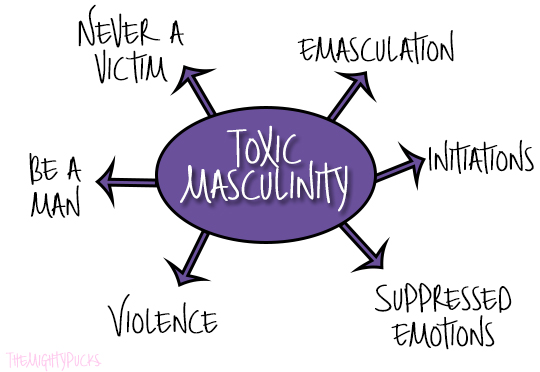
Toxic masculinity is a term that describes the cruel types of ideas about the male gender role. The term is defined as exaggerated masculine traits like being violent, unemotional, sexually aggressive and so forth. It also suggests that men who act too emotional or maybe are not violent enough or do not do all of the things that "real men" do, cannot be regarded as men. A lot of people confuse the difference between masculinity and toxic masculinity. However, one can be masculine without having toxic masculinity.

Some beliefs about toxic masculinity are that:
- interactions between men and women always have to be about competition rather than cooperation,
- men can never truly understand women,
- men and women can never truly be just friends,
- the idea that "real men" need to be strong and not show emotions because that is considered as a sign of weakness, and that
- "real men" can never be victims of abuse and that if they ever become victims, talking about it is considered as shameful.

The media can change people's perspectives on toxic masculinity by:
- not portraying men as always strong and powerful than women but also allowing them to show their weaknesses and downfalls,
- not giving men positions that are way above women's,
- showing men that doing "female stuff" is not considered as being gay, and by
- allowing men to show their feminine side without being ashamed.

Toxic masculinity can only be prevented if we teach boys from a young age that it is okay to not be too strong, it is okay to not be violent, it is okay to like the color pink instead of blue or green and that it is okay to be soft.

Sunday, 10 March 2019

COMMERCIALIZATION OF RELIGION IN SOUTH AFRICA AND THE UNDERLYING ISSUE(S)

I would like to think that people lack a sense of belonging. They are desperate to find something to believe in to the point that they end up believing every little thing that comes their way without gathering all the facts and the necessary information related to it. Many people are desperate for miracles and blessings. Poverty and unemployment are at the center of people's reliance on these fake pastors and prophets. They are desperate and they will do just about every and anything they are told to do if they are promised that it will change their lives. Some of these people rely too much on religion that they believe every little thing that is related to religion. A lot of African people do not question the existence of God like the people in the Western World do, instead they see these fake prophets as messengers from God. These pastors; or rather fake prophets; on the other hand are desperate for fame, followers and money. These so-called prophets are business people that are taking advantage of the poor and troubled souls and are making a living for themselves through their misery. These prophets also gain power from having politicians that are faithful members of their churches. They believe that if they can win over the people that are running a country then there is nothing stopping them from doing just about anything even toying with desperate people's feelings. The actual reality is that these fake prophets are fake and they are just scammers looking to make a quick cash from desperate people.

HOW THE SOUTH AFRICAN GOVERNMENT CAN HELP YOUNG ENTREPRENEURS

It is of great concern that the unemployment rate in South Africa in the fourth quarter of 2020 was at 46% according to StatsSA. With more t...